
Story Sequencing (Putting a Story in Order)
Some children read the words early and beautifully, and that is a real strength worth celebrating. The next step is holding the story together: what happened first, what came in the middle, how it ended, and telling it back in their own words. This tool gives your child a short, friendly story and lets them put its events in order, then retell it. It is calm, unhurried practice, and you can print clean story-strip cards to cut and order at the table.
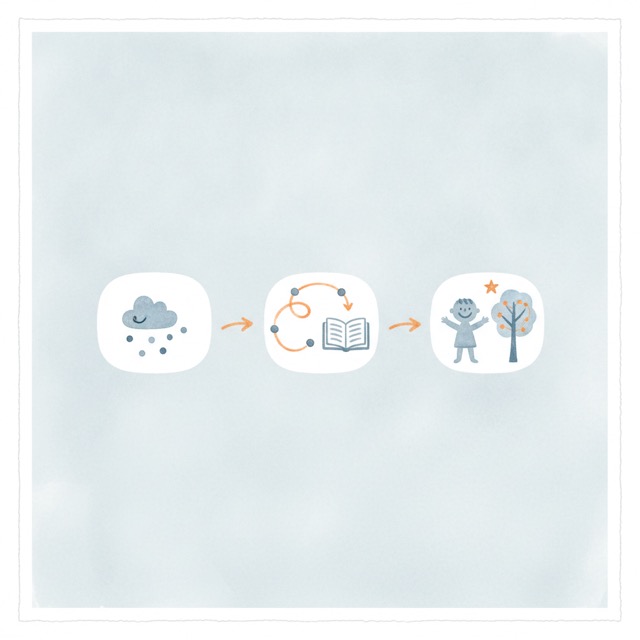
Pick a story, then put its events in the right order using the up and down arrows. Check it when you are ready, then retell the story in your own words.
- 1
A child plants a tiny seed in the soil.
- 2
They water it every morning.
- 3
A small green shoot pushes up.
- 4
A bright flower opens in the sun.
Print the cards, cut them out, and put the story in order at the table.
What Story Sequencing does
Reading every word of a story and holding the whole story in your head are two different things. A child can sound out each sentence perfectly and still find it tricky to say what happened first, what came next, and how it all ended. That thread, the order of events and the shape of the story, grows with practice, and it grows best when there is no pressure and no wrong-feeling answer, just a friendly story and time to move the pieces around.
Story Sequencing gives your child a short, friendly story, then lets them arrange its events in order, beginning, middle, and end, and retell it in their own words. It is a calm, playful way to build narrative understanding, with clean printable story cards to cut, order, and retell away from the screen. From kindlexy.com.
How it works
- 1
Read a short story
Start with a short, friendly story, one your child can read comfortably. The reading itself is the easy, enjoyable part.
- 2
Find the beginning, middle and end
Talk about how the story starts, what happens in the middle, and how it wraps up, the three parts that give a story its shape.
- 3
Put the events in order
Move the events into the order they happened. There is no rush, just a gentle puzzle and room to try, rearrange, and see the story come together.
- 4
Retell it in your own words, print story cards
Retell the story from start to finish in your own words, and print neat story-strip cards to cut, order, and retell away from the screen.