
Skip Counting
Counting in groups is the quiet bridge between counting one by one and multiplying. This tool shows your child a number line and lets them hop along it in twos, fives, and tens, with each jump drawn as a little arc so the pattern is easy to see. A calm, visual way to build the groups that times tables are made of, with printable number lines for the table.
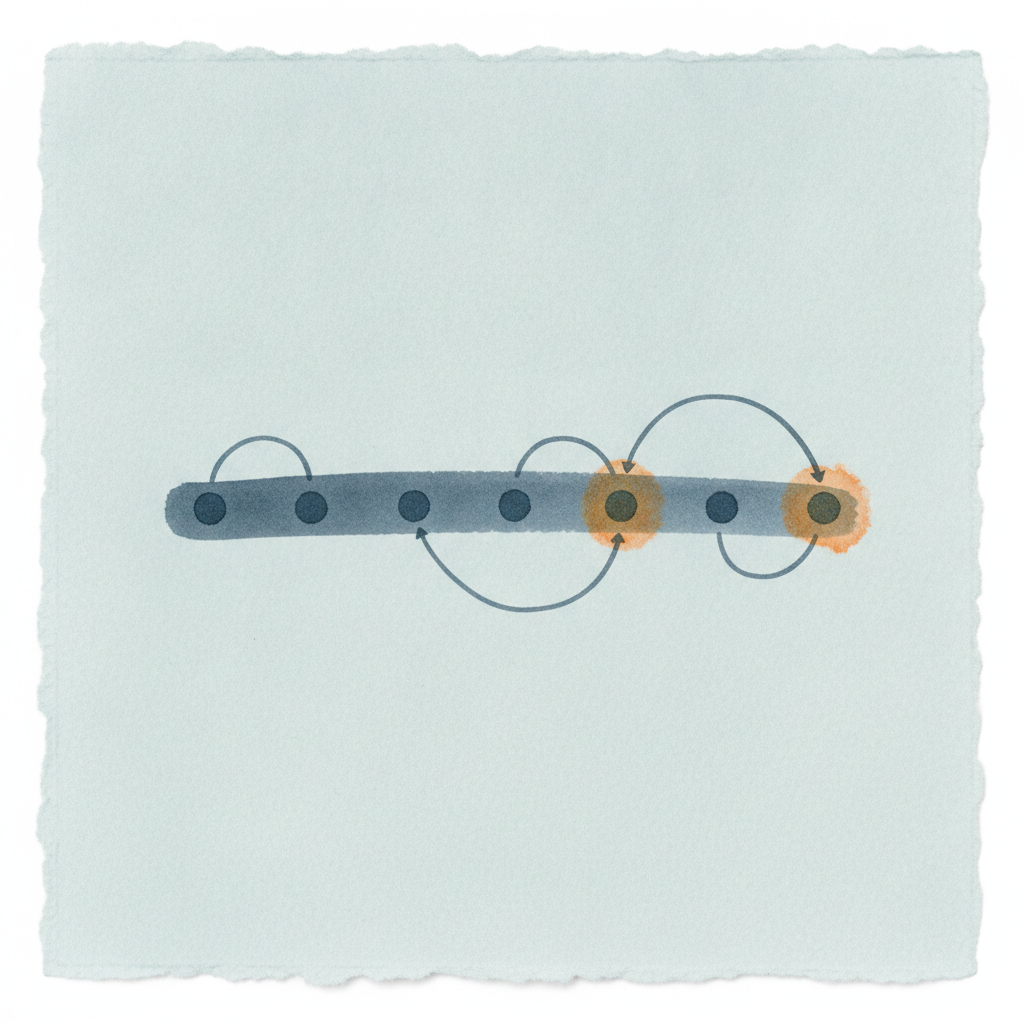
Count in twos, fives, and tens along the number line. Each arc is one jump, and the numbers it lands on make the pattern. Print a line or a pattern card to keep counting away from the screen.
This is the same as 5 × 2. Reaches 10.
What Skip Counting does
Counting one by one always works, but it stays slow, and a child can lose their place halfway up. Skip counting groups the numbers into a rhythm, two, four, six, or five, ten, fifteen, so the climb gets shorter and steadier. Drawing each jump as a hop along the number line turns the pattern into something a child can watch and feel, not just recite. This is not about being quick at math, it is about seeing the groups that make bigger numbers make sense.
Skip Counting lets your child pick a step, two, five, or ten, and hop along a number line, watching each arc land on the next number in the pattern. Counting in groups like this is the same idea that multiplication is built on, so it gives them a feel for it long before the times tables arrive. With printable number lines and pattern cards, you can keep counting away from the screen. From kindlexy.com.
How it works
- 1
Pick a step
Choose to count in twos, fives, or tens. Start small with twos and work up as the pattern gets familiar.
- 2
Hop along the number line
Each jump is drawn as a little arc landing on the next number, so two, four, six becomes something you can see, not just say.
- 3
Spot the pattern
As the hops land, the numbers form a steady rhythm. Your child can predict the next jump before it happens, the start of counting in groups.
- 4
Print number lines and pattern cards
Print clean number lines and pattern cards so your child can keep skip counting away from the screen.