
Letter Reversal Practice (b d p q)
The letters b, d, p, and q are mirror images of one another, so it is no surprise children flip them while they learn. This tool gives your child gentle, hands-on ways to tell them apart: simple memory tricks like the bed method, finger and pencil tracing, and printable practice sheets. Practice on screen or print clean pages.
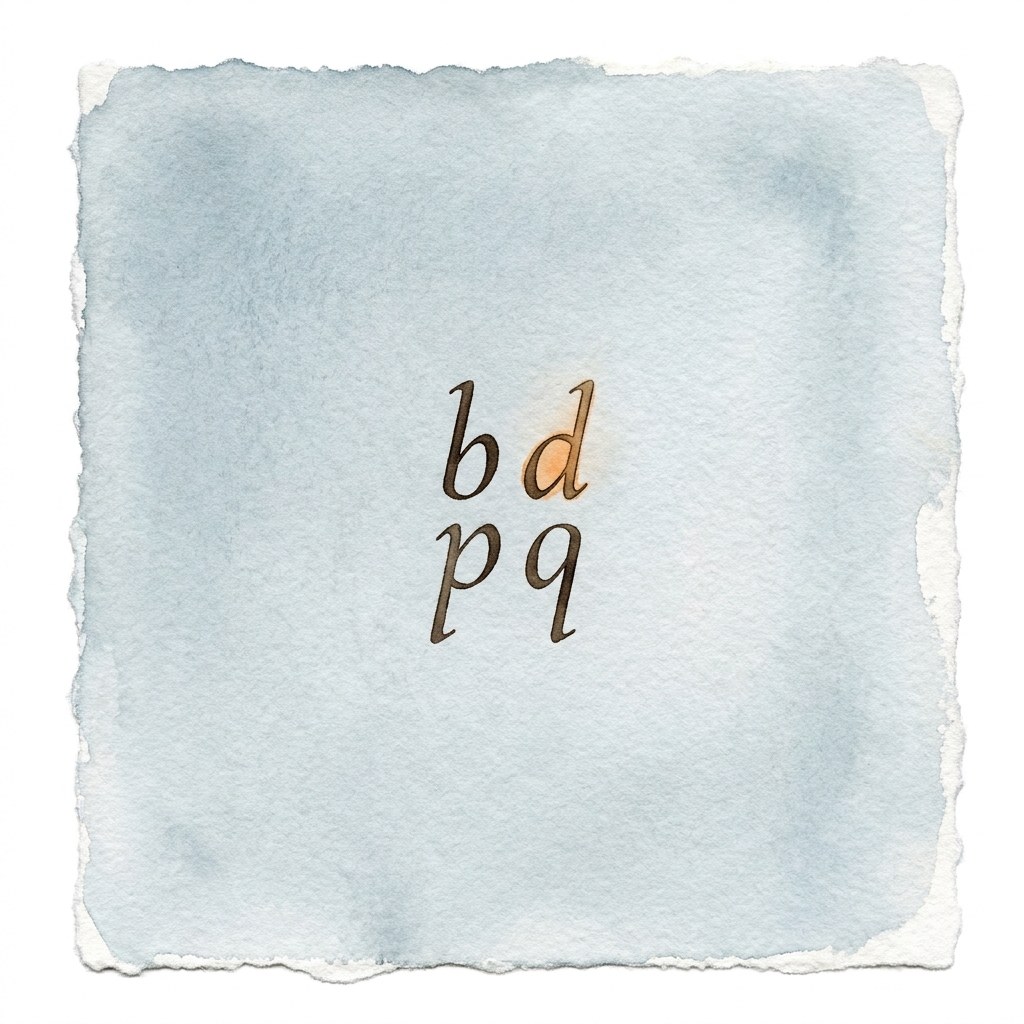
Which letters get mixed up?
Choose the pairs your child flips or confuses. b and d are the most common. Add the ones you see, then practice on screen or print cards to trace.
What the Letter Reversal Practice does
The letters b, d, p, and q share one shape, a circle and a stick, and only the direction changes. Because they are mirror images, mixing them up is one of the most common things young readers do, and it does not mean anything is wrong. What helps is giving a child a steady picture to hold onto and a way to feel the shape in their own hand, so the right letter stops being a guess.
The Letter Reversal Practice offers friendly memory tricks like the bed hand method, guided finger and pencil tracing, and printable sheets so your child can practice telling the four letters apart. It is a calm, playful way to build a habit that makes reading and writing feel easier. From kindlexy.com.
How it works
- 1
Pick a letter pair
Start with the pair your child mixes up most, like b and d, then add p and q when they are ready.
- 2
Learn a memory trick
A simple cue like the bed picture gives your child something steady to picture before they write.
- 3
Trace and practice
Trace the shape with a finger or pencil, then spot the right letter inside words. Print a clean sheet for the table.
- 4
Practice a little, often
Short, frequent rounds work best, so the right letters start to feel automatic.