
Emotion Chart
Some children, especially those with autism or hyperlexia, find their own feelings hard to read or describe. This tool turns emotions into a simple chart of clear faces, so a child can point to how they feel and print it for the wall or the fridge.
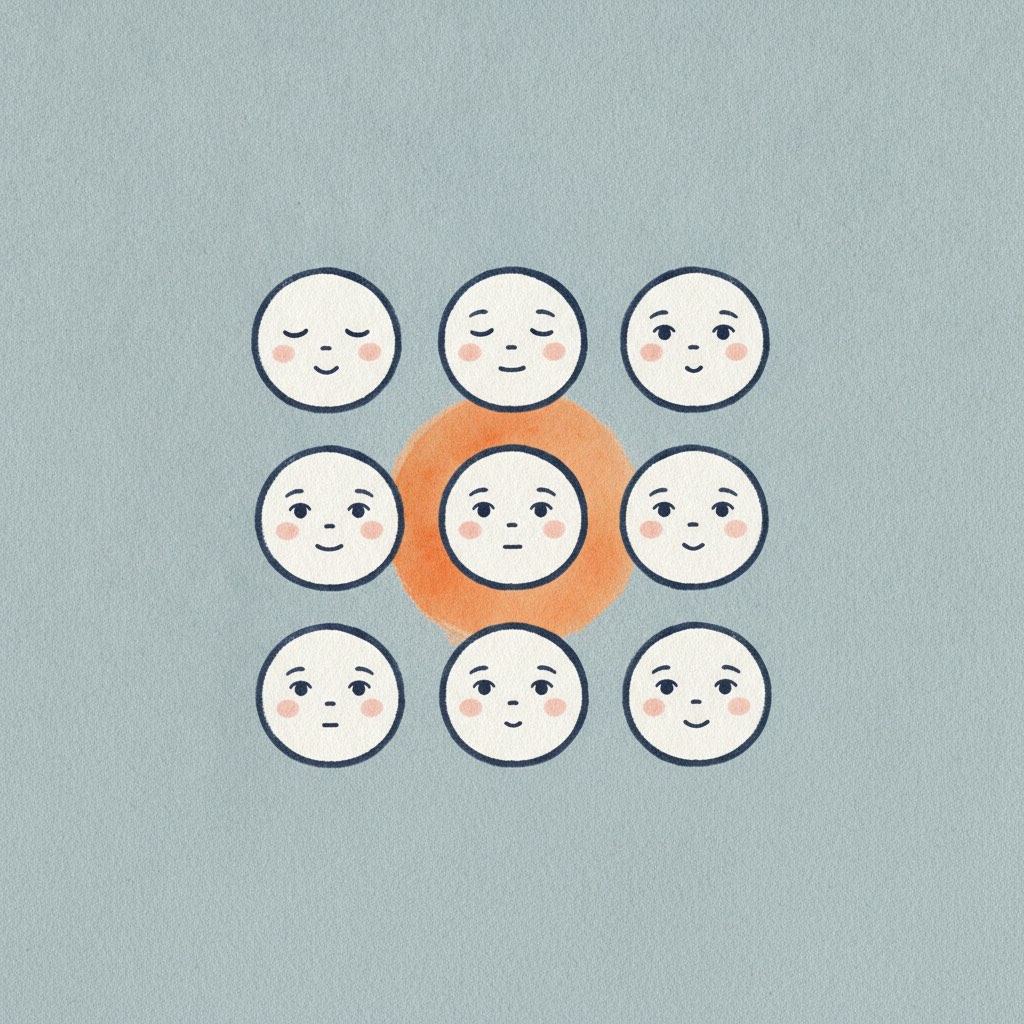
Build a chart of feelings your child can point to. Naming a feeling is the first step to handling it.
How are you feeling?
Tap to add or remove feelings from your chart.
Keep at least two feelings on the chart.
What the Emotion Chart does
For a child who finds feelings hard to read or put into words, the most helpful thing is often simply being able to point. An emotion chart turns an invisible feeling into a row of clear faces: happy, sad, angry, scared, tired, calm. The child can show you how they feel before they ever have the words for it.
The Emotion Chart lets you pick the feelings that matter, arrange them, and print a clean chart for the wall or the fridge. It is a gentle way to take the pressure off naming emotions, something many autistic and hyperlexic children find hard. From kindlexy.com.
How it works
- 1
Pick the feelings
Choose simple face cards for the emotions that come up most in your child's day.
- 2
Arrange the chart
Lay the faces out into a clear chart, so every feeling has its own place to point to.
- 3
Print it
A clean chart for the wall or the fridge, ready in seconds. Nothing leaves your device.
- 4
Use it together
Let your child point to a face when words are hard, so naming a feeling becomes a calm habit.