
Conversation Practice (Everyday Talk and Taking Turns)
Some children read and speak words beautifully, and that is a real strength worth celebrating. The trickier part can be the social back-and-forth of conversation: knowing what you might say in a common situation, and how taking turns works, you say something, you listen, you respond. This tool gives your child gentle everyday scenarios and a few things they might say, so they can practice at their own pace. It is calm, unhurried practice, and you can print clean scenario cards for the table.
What Conversation Practice does
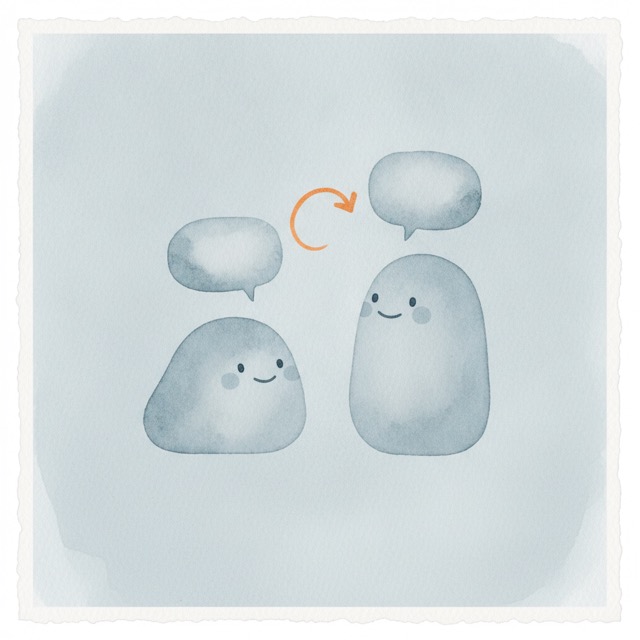
Reading and speaking words is one skill, and the social back-and-forth of conversation is another. A child can read beautifully and speak in full sentences and still wonder what to say when a friend says hello, or when to jump in and when to listen. That back-and-forth grows with practice, and it grows best when there is no pressure and no wrong-feeling answer, just a friendly situation and time to try.
Conversation Practice gives your child a gentle everyday scenario, then shows a few things they might say and a calm way to practice taking turns: you say something, you listen, you respond. It is a warm, playful way to practice social and pragmatic language, with clean printable scenario cards so you can keep rehearsing away from the screen. From kindlexy.com.
How it works
- 1
Pick an everyday situation
Start with a friendly, familiar scenario, saying hello to a neighbor, asking to join a game, ordering at the counter. Choose one that feels comfortable to try.
- 2
See a few things you might say
Look at a few gentle options for what to say, so the words are there when your child needs them. There is no single right line, just some friendly starting points.
- 3
Practice taking turns
Try the back-and-forth together: you say something, you listen, you respond. Take it slowly, with room to pause and think.
- 4
Print scenario cards
Print a neat set of scenario cards so you can keep rehearsing everyday talk gently, away from the screen.