
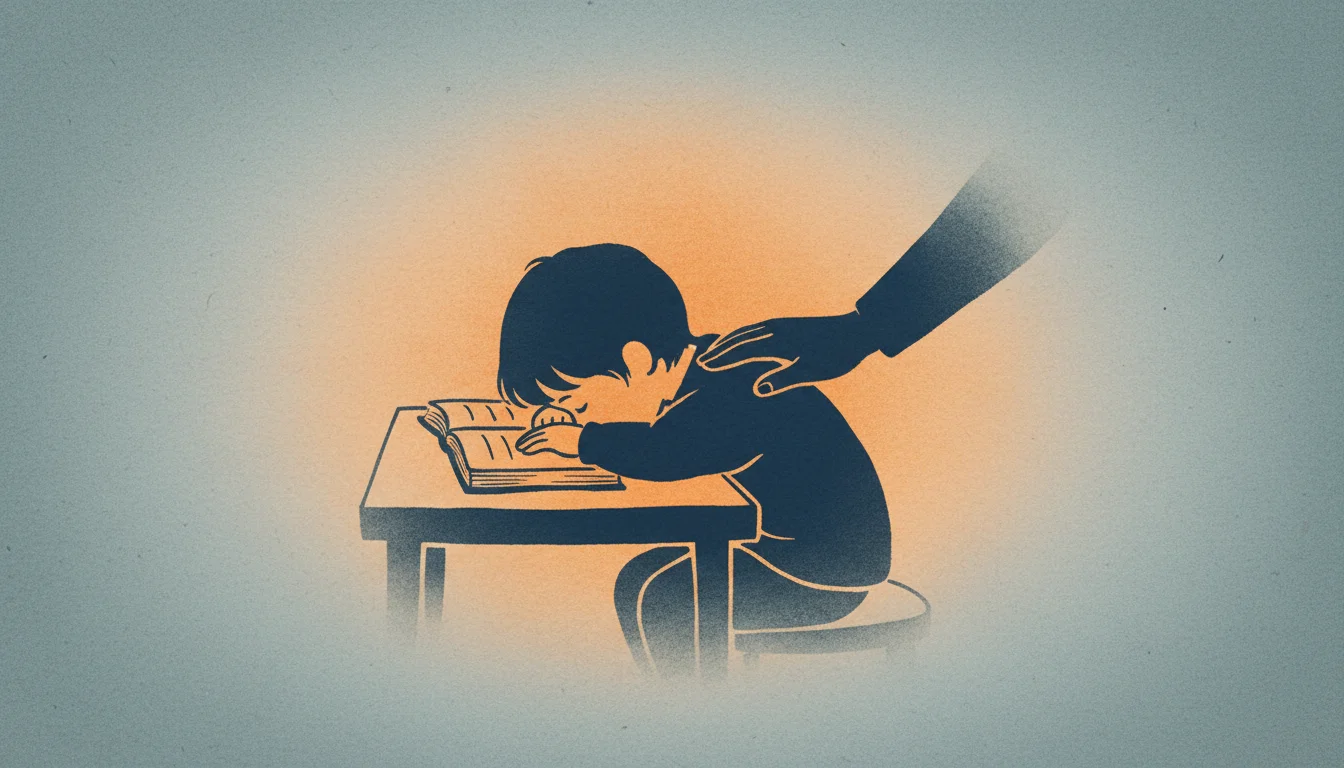
It is Wednesday evening. Your child has been worn down all week by homework, reading checks, teacher corrections. They open the page, their eyes glaze over, and they say, “I can’t, I’m tired, I’m done.” You have come out of the same week and your patience reserve is also low. The air in the room turns heavy.
Almost every parent of a child with dyslexia has lived that moment. On Reddit a parent writes, “Sometimes she says she’s tired of being dyslexic and I don’t know what to say.” Hundreds of parents in the comments share the same scene. So we are not alone.
This post is for those tired days. When the child is spent, when the parent is spent, when both of you are running on fumes. Practical suggestions, but first an acceptance.
First, an Acceptance
Tiredness is a natural part of a dyslexic child’s daily life. A reading passage their peers finish in ten minutes barely fits into forty for your child. During that time the brain is working twice as hard: decoding words, catching meaning, holding attention, pulling the eye back when it wanders.
When they look “lazy” in the evening, that is not laziness. It is the out-of-breath after a cognitive marathon. Holding that distinction in mind is the start of meeting a tired evening with love.
The same goes for you. Being the parent of a child with dyslexia means living with an extra mental task most of the time. Planning, communicating with teachers, holding the child’s emotional ground, managing homework friction. That work is invisible, but real. Getting tired is natural, not a thing to feel guilty about.
Early Signals of a Tired Day
Before the day fully crashes, the child gives small signals. Catching them early prevents the bigger crash at the end of the night.
- Reading the same line over and over without moving forward
- Leaving a sentence unfinished and switching to something else
- Saying harsh things about themselves like “I’m stupid”
- Physical restlessness: shaking a leg, snapping a pencil, jumping up
- Rubbing eyes, holding head in hands
- Suddenly being short-tempered with siblings or with you
When several of these appear together, the homework is not progressing anymore. Pushing through grows tiredness, shrinks gain, builds emotional damage.
Practical Management of a Tired Day
1. Stopping Is a Strategy
We were taught that “an unfinished task is a failure.” That logic does not work in a dyslexic child’s tired evening. Stopping is one of the biggest gifts you can give to your child and to yourself.
A line that helps:
“This is not working tonight, and I can see that. We will look at the rest of the homework tomorrow. Let’s do something else for now.”
This sentence:
- Tells the child they are seen (“I can see that”)
- Carries no blame (no “you didn’t finish because you’re lazy”)
- Names the next step (“we’ll look tomorrow”)
- Redirects attention (“let’s do something else”)
2. A Clear Note to the Teacher
If a tired evening means the homework was not done, a short note to the teacher makes the next day calmer for the child. It saves them from getting embarrassed in class, and the homework moves to tomorrow.
“Yusuf was very tired today and could not finish his homework. We’ll complete it at home tomorrow and send it to you. Thanks for understanding.”
A two-sentence message. Don’t over-explain, don’t sound apologetic, just inform.
3. Audiobook in Place of Homework
A child too tired to read may still want to stay in the “book world.” That is when an audiobook earns its place. The child listens, follows the story, the vocabulary keeps growing. Not homework, but the day still ends with reading in some form.
Fifteen to twenty minutes of an audiobook offers a soft transition into the rest of the evening.
4. Accept the Body’s Tiredness
A dyslexic child has been using their attention muscle all day. Expecting them to come back to the page in the evening is like asking a child who just ran a race to run again.
Alternatives for a tired evening:
- An early warm bath
- Crawling into bed with an audiobook or a cartoon
- A small game together, just for fun, not for logic
- Easy kitchen help (clearing cups, setting napkins)
- Just sitting next to each other quietly
5. The “Let Them See Love Today” Principle
The danger of tired days is this: the child gets hurt less by the tiredness itself, more by the feeling that they are not loved when they are tired. “I am loved on good days, my worth drops on bad days” plants a crack in self-esteem over the years.
So somewhere in a tired evening, love needs to be visible. A hug, a sentence, a small ritual:
“I see today was hard for you. That doesn’t make you any less lovable, you’re just tired today. Tomorrow is a new day.”
This sentence builds in the child’s mind the bedrock of “my parent stays with me on bad days too.” That bedrock is the strongest emotional protector long term.
Days When You Are the Tired One
Sometimes the child is still going but you are spent. That is also legitimate and real. The invisible weight of a parent often peaks in evening hours.
Tell Yourself a Sentence
“I did enough today. Tomorrow is a new day.”
This simple line softens the inner critic. There is no perfect parent, only the consistent caring parent. One missed homework evening, one disrupted week, the world has not ended.
Set a Boundary with Love
Your child is reaching out but you need to step back. You can say it with warmth:
“I need a little time for myself right now. I’ll come back in half an hour and then we’ll talk. Okay?”
The child gets the frame. They feel a temporary pause, not rejection. On top of that, when you take your own care seriously you offer the child a model of holding boundaries.
Flag-Pass with a Partner
If your home has two parents, set up a tired-day flag system. “I’m running on empty tonight, can you take homework?” is a clean and healthy exchange. If you are solo, a similar request to a close relative or friend is just as valid.
Not Letting a Tired Day Become a Crisis
Tired days are unavoidable. Letting one turn into a crisis is avoidable. The difference is the parent’s response.
| Response that triggers crisis | Response that defuses it |
|---|---|
| ”Again? You always do this" | "I see this is hard today" |
| "How can something this simple take so long?" | "This page is too much for tonight, let’s do something else" |
| "Stop being lazy, sit down and finish" | "You’re tired, let’s take a break" |
| "Kids your age are doing this already" | "Your path is your own, let’s not compare” |
The first column pushes the child into defense. The second column lets them feel you are with them. Avoiding the crisis is not always possible, but a direction can be chosen on purpose.
When Professional Support Is Needed
A tired day here and there is normal. But if these signs are running for more than a couple of weeks, consult a child psychologist:
- Crying or rage at the sight of reading every day
- Saying things like “I want to die” or “I shouldn’t exist”
- A clear disruption in sleep or eating
- Visible social withdrawal, avoiding friends
- Self-harm signs
These are signs that have moved past tiredness and need professional attention. The school counselor can be a first stop. Kindlexy does not diagnose or treat. Working with a qualified professional in this moment is part of parenting, not a weakness.
Where to Go Next
Tired days will keep happening. The goal is not to bring them to zero, it is to come through with less damage. Tomorrow is better simply because today ended. Consistency is what we are looking for, not perfection.
The frames in this post are not for one-time use. They become reflexes only after years of repetition. If you forget one evening, try again the next.
For more, kindlexy.com keeps growing with parent-focused guides. Talking to your child about dyslexia deepens the emotional conversation, supporting your child at home lays out the daily structure.
Today might be hard. Tomorrow is a new day.