
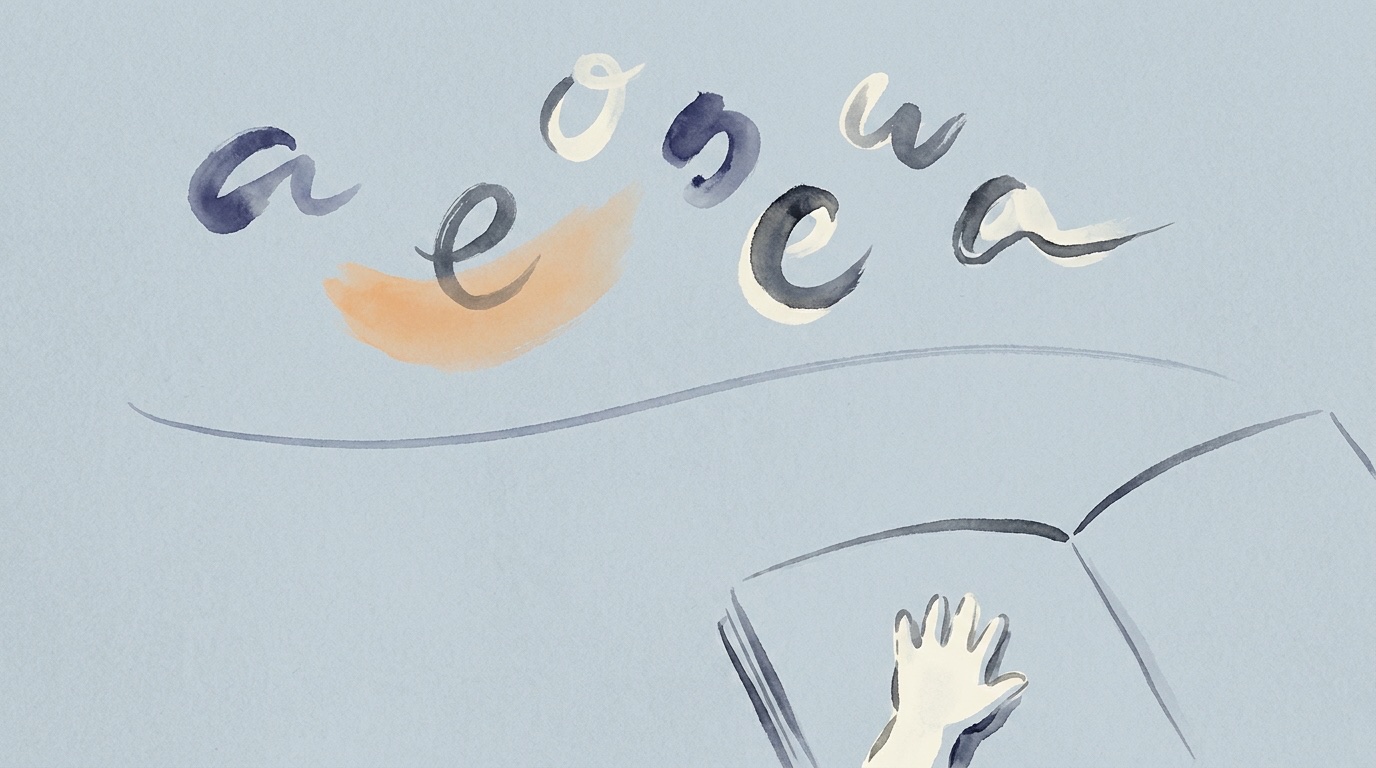
You open the notebook and your eye goes straight to the same place. Letters are one big, one small, some above the line and some below. The same word is written one way on this line and another way on the next. The spaces between words are sometimes crushed together and sometimes wide open. For most parents the first thought is the same: “If only they took a little more care, it would not look like this.”
Here is the part that aches: the child often is taking care. They write more slowly, bite their lip, grip the pencil hard, pour everything into the page, and the result still comes out the same. This article is here to say that this picture may have a name, and that name is not “lazy” or “careless.” It is about how dysgraphia looks in the primary years, so you can quietly think about whether it matches what you see in your own child.
What We Actually Mean by “Messy”
Dysgraphia is a learning difference that makes written expression hard. Most people picture the look of the handwriting first, but it is not only about neat letters. Underneath sits the difficulty of doing several jobs at once: planning the movement of the hand, holding each letter in mind and shaping it, and thinking about what to write, all at the same time. An adult hand does this automatically. For a child with dysgraphia each of these jobs asks for separate attention, so none of them gets quite enough.
From the outside the result looks like “messiness.” But messiness is being able to do something and not bothering. What we see here is different: the child cares, but the bridge between hand and mind is not laid as smoothly as it is for their peers. The same root often comes from common ground with dyslexia, but dysgraphia shows up in writing itself rather than in reading.
What Dysgraphia Looks Like in Primary School
No single sign proves anything. But when these patterns appear together and keep going over time, they are worth a closer look:
- Illegible or unsteady handwriting. Letters do not settle into a size or slant, the same letter appears in several forms on a page, and writing drifts off the line.
- Tiring, slow writing. The child visibly labors, grips the pencil too tightly, tires quickly, and takes a long time over even a short paragraph.
- Spelling and missing letters. The same word is spelled differently in different places, letters drop out or swap, and capitals and punctuation come and go at random.
- Not being able to write what they can say. The child tells the story out loud fluently and richly, then puts the same thing on paper as a few flat sentences. That gap is often the clearest clue of all.
- Avoiding writing. Resistance, delay, “I can’t,” or a stomachache around tasks that need writing. This is usually not laziness but the very human urge to avoid the thing that is hard.
It is no accident that these patterns show up in a child who is strong at speaking. Dysgraphia is not about intelligence or the richness of the idea. It lives in the part where the idea has to travel to the hand, and from the hand onto the page.
Why It Is Not Laziness or Carelessness
This is the most misunderstood part, so let us say it plainly. A careless child improves when they slow down; a little focus tidies the writing up. A child with dysgraphia often does not improve by trying harder, and may even get worse, because the hand tires more. Telling them “sit down and write carefully” is a little like telling a child who cannot see well to “look more carefully.” The problem is not unwillingness.
There is a hidden weight here too. The child notices that their writing is not like everyone else’s. They close the notebook and say “I don’t want to,” but underneath there is often the fear that “it will come out badly again.” That is why the first thing that helps is never a technique. It is the child knowing they are not stupid or lazy at this. Hearing, just once, “you are not failing to try, this is genuinely harder for you” brings a visible relief to most children.
When It Is Worth a Closer Look
Plenty of children write messily in the early years and settle over time, and on its own that means nothing. A closer look makes sense when:
- Handwriting and writing difficulty are clearly behind peers and are not easing over months.
- There is a large, lasting gap between the child’s spoken and written expression.
- Writing tasks regularly come with tears, avoidance, or “I’m stupid.”
- There is a family history of reading, writing, or learning differences, which raises the likelihood for well-understood reasons.
If this picture feels familiar, you can read more deeply about how dysgraphia sits alongside dyslexia to see writing as a whole, and then plan how to talk it through with the teacher as a next step. A formal assessment always happens with school and specialist support, but your observations set the direction.
What Helps
With a formal label or without one, the same gentle moves make writing easier and protect the child’s confidence:
- Separate the idea from the writing. Let the child tell it first, gather it in words with you or aloud, and leave the writing for last. That way the load of “what do I say” and the load of “how do I write it” do not land on the same shoulder at once.
- Lower the physical demand. Wider line spacing, a thicker or easier-to-hold pencil, shorter but more frequent writing breaks. Our free writing paper tool is made for exactly this kind of relaxed, no-pressure practice at home, with no sign-up.
- Praise the idea, not the look. “That was a great idea” does more good than “how neatly you wrote,” and it keeps the child’s worth from being tied to their handwriting.
- Make peace with the keyboard. As writing grows heavier in later years, a keyboard becomes a real bridge. Think of it not as giving up but as a tool that frees the hand and opens room for the idea.
- Keep the pressure low. Children with dysgraphia do best when the room stays warm and patient rather than tense. A hurried desk only locks the hand up more.
Holding It All Calmly
That messy-looking page in your child’s notebook is, most of the time, the mark of unseen effort rather than not caring. Dysgraphia does not decide your child’s intelligence or their future. It is simply an area where the idea needs a little more help on its way to the page. Once you see it this way, your tone changes too, and the child feels it.
A child whose writing is messy is not a messy child. They are usually a child with a great deal to say, who just needs a little more patience beside them while they carry it onto the page. For more gentle, practical guidance, kindlexy.com is always here.