
Right before bed, your child looks at you and says: “I wish I didn’t have dyslexia. I hate it.”
That sentence is a leak. A whole day’s worth of fatigue, embarrassment, and self-anger pouring out in one phrase. Inside the parent, several things move at once: the urge to protect, the search for the right answer, self-blame, a kind of helplessness.
This post walks through what to say and not to say in that moment, how the child’s negative inner voice gets shaped, and how to work with it over time.
What Is the Sentence Really Saying?
“I hate my dyslexia” looks clear on the surface but carries many layers underneath.
- Tiredness: the child has been fighting with words all day, that fatigue spills out in the evening
- The pain of comparison: “my friend reads, I can’t”
- Invisibility: the child’s effort isn’t recorded, so it feels like “I’m not enough”
- Classroom shame: fear of reading aloud, making mistakes, being laughed at
- A specific moment: an echo of something the teacher or a friend said that day
- A call: “understand me, see me, be with me”
When a child says this sentence, they often aren’t really talking about dyslexia, they are talking about the anger they feel toward themselves. Holding that distinction in mind shapes the parent’s response.
What Not to Say
Some well-meant sentences actually pile more weight onto the child.
”Don’t blow it out of proportion, everyone is different”
This shrinks the child’s feeling. It reads as “I’m telling you to feel something, you’re telling me to be quiet.” The child may not open up again.
”Having dyslexia is a gift, can’t you see?”
Said in good faith and grounded in research, but next to the child’s pain it lands as denial. The child can feel more alone after this answer.
”Einstein had dyslexia too, you’ll succeed”
Famous-name references can inspire sometimes, but on a tired evening they hit as pressure. They build the equation “if I succeed I have value, if I don’t I don’t."
"Forget it, it’s just in your head”
This denies the child’s experience. It dismisses the reality of dyslexia, the academic struggle, the emotional load. The child feels “even at home I am not understood."
"If you work harder it will pass”
This sends the message that the difficulty depends on effort. Dyslexia doesn’t pass with effort. Working harder only tires the child further.
Silence
Saying nothing is also an answer. “My parent doesn’t want to talk about this” deepens the child’s loneliness.
What You Can Say
There is no single perfect answer, but there is a frame, and that frame helps the child feel seen, understood, and not alone.
First: Name the Feeling
“You look really tired and angry right now. I hear it.”
This sentence is not a miracle, but it is a beginning that accepts the child’s feeling. It does not jump to the solution, just keeps company. That is often what is needed.
Then: Widen the Story
After the child gets a breath, a second line:
“Did something hard happen at school today? What was the most tiring part?”
This question opens space for the child to talk. The answer might be “the teacher corrected me again,” “a friend made fun of me,” or “I just don’t get the words.” Whatever it is, a concrete moment surfaces. That is far more workable than the abstract “I hate my dyslexia.”
Third Step: Share Your Own Story
If you, or a close relative, have had a similar experience, sharing it briefly tells the child they are not alone.
“When I was your age I struggled with reading too. Sometimes I got mad at myself. It didn’t go away, but over the years we found another place with each other.”
This doesn’t promise a miraculous fix. It simply offers the floor that “someone else has felt this, and life went on.”
Closer: Be Side by Side
The line:
“We don’t have to solve this right now. I’m just here with you.”
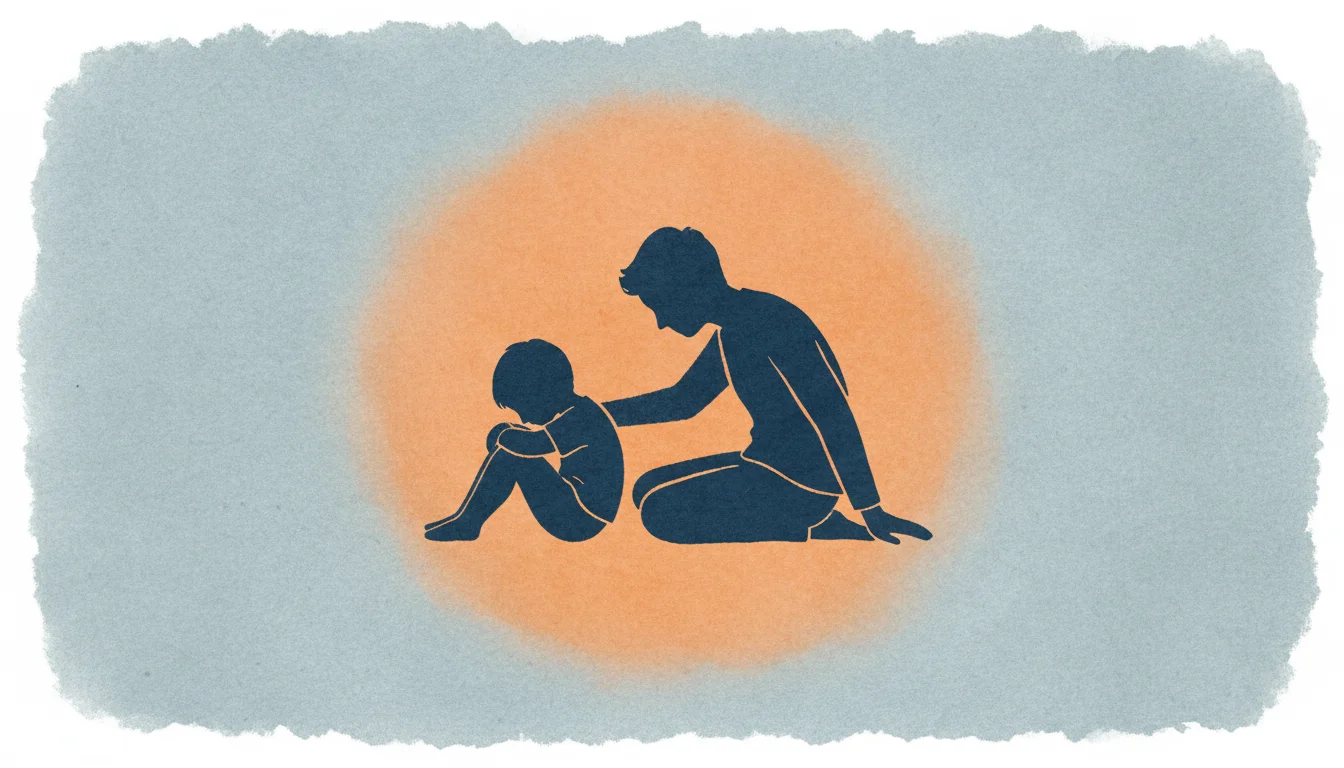
That simple line gives the child exactly what they were looking for. Most of the time, the call beneath “I hate my dyslexia” was for being side by side.
How the Negative Inner Voice Forms
The inner voice that arrives at “I hate my dyslexia” is built over years. Understanding the building helps both the immediate response and the long view.
Building Blocks
- Classroom embarrassment moments: stumbling on a read-aloud, being laughed at over a low score
- Adult comments: “why are you so slow?”, “if you paid attention you’d get it” stacking up
- Comparison: a sibling, cousin, or classmate placed alongside, the child feels not enough
- Invisible effort: the work the child puts in not being recorded, only the result counted
- Internalization: these experiences turning into “I’m stupid”
This loop runs for years. The parent’s job isn’t to break every loop (impossible), but to break some of them and to offer the child alternative inner voices.
How an Alternative Inner Voice Forms
When the child says “I’m stupid,” if at home they consistently hear other sentences, those new sentences in time become part of the inner voice:
- “This topic is hard for you, so we’ll try a different method”
- “When you’re tired the words slip away, that’s normal”
- “This page is too much for tonight, we’ll look tomorrow”
- “Your strength is here”
- “Mistakes are part of learning”
These sentences don’t work in one go. Repeated for years, the child starts to hear them inside themselves. A slow but real transformation.
Working with a Persistent Negative Inner Voice
If your child often says “I’m stupid,” “I can’t do anything,” “I hate being myself,” you have to work with this over time.
Listen Without Judgment
When the child says something negative about themselves, don’t rush to correct: “no you’re not.” That invalidates their feeling. Instead:
“When you say that, how does it feel inside? Where does that feeling come from?”
This question opens room for thinking. The child doesn’t have to know the answer, just feel that someone is interested.
Make the Effort Visible
Every day, point out an effort the child might miss:
- “You worked hard to get through this page”
- “You didn’t give up when you made the mistake, you tried again”
- “That word was hard but you said it”
These small lines soften the “my effort isn’t recorded” feeling. After years of repetition, the child starts to say to themselves “I’m someone who tries.”
Reframe the Defeat Moments
When a bad exam, a failed check, a hard day comes, your reaction gives the child a template for interpretation:
| Frame that turns defeat into ruin | Frame that turns defeat into growth |
|---|---|
| ”You did it again" | "It didn’t work this time, we’ll see next time" |
| "You can do it, why isn’t this happening?" | "This exam is not your worth" |
| "If you work harder it will pass" | "This method didn’t work, let’s try another" |
| "It’s always like this" | "Every day is different, we’ll see tomorrow” |
The right column places “defeat is temporary” into the child’s mind.
Where Professional Mental Health Comes In
A negative inner voice shows up in every dyslexic child’s life sometimes, that is normal. But when these signs appear, child psychologist support is needed:
- Sentences like “I want to not exist”
- Sharpening comments about their body or about hurting themselves
- Marked social withdrawal, avoiding friends
- Persistent disruption in sleep and appetite
- A period when no positive sentence balances the negative inner voice
These signs go past the parent’s response capacity. A child psychologist or child and adolescent mental health specialist is part of parenting, not a weakness.
Kindlexy does not diagnose or treat. This post is a starting frame, not clinical support.
Where to Go Next
The sentence “I hate my dyslexia” shakes every parent. But received well, it becomes a door for the child, a door that opens rather than closes. In that moment, be as honest, as warm, as side-by-side as you can.
You don’t have to say a sentence perfectly. What your child will remember years later is not the words, but the feeling that “my parent listened to me.”
For more, kindlexy.com keeps growing with parent-focused guides. Talking to your child about dyslexia gives the building blocks of emotional language, and the hidden strengths of dyslexia lays out the alternative frames you can use against the negative inner voice.