
When you first voice a small concern about your child, the response from a well-meaning friend, relative, or even a professional is often the same: “They are still young, let’s wait and see.” That sentence usually comes from a place of genuine care, an attempt to calm your worry. But research says something very different. Waiting, in some situations, is not reassurance - it is a missed window. This post looks at where the “wait and see” advice comes from, why it does not hold up against current evidence, and why early action offers a smoother road for both the child and the parent.

Why “Wait and See” Is So Common
Traditional parenting wisdom often says: “Children develop at their own pace, do not push them.” In many areas of development, that is perfectly true. One child may sit up at six months, another at nine, and both are healthy. Walking, first words, toilet training - in these areas, “give it a bit more time” is usually sound advice. The problem is that the same logic does not always apply to reading difficulties.
Dyslexia is not a developmental delay that a child will simply outgrow. It is a persistent difference in how the brain processes language. It does not go away on its own. As a child grows, the brain’s plasticity gradually decreases, and the critical window for building reading networks is concentrated in the period from preschool through the first years of primary school. Support provided during this window typically requires less effort than support provided later. The same outcomes can still be reached at a later age, but both child and family usually have to spend more time and more emotional energy to get there.
Sometimes the “wait and see” advice comes from schools themselves. Some schools consider a referral “too early” and postpone evaluation until the second or third year. This approach does a disservice to the early interventions that can begin well before a formal diagnosis. Pediatricians, too, may see the issue as outside their specialty and send families home with a simple “let’s wait.” This advice is never ill-intentioned - it is simply outdated.
The introductory post on understanding dyslexia lays out the neurological background behind why early intervention matters so much. Knowing that background gives you a calm but strong answer when someone tells you to wait.
What Research Says
The International Dyslexia Association, NICHD (the National Institute of Child Health and Human Development), and decades of work within the science of reading movement all confirm the same point over and over: early intervention makes a measurable, long-term difference in a child’s reading development. Several core mechanisms explain why.
First, brain plasticity. In the early years, the brain regions responsible for building reading networks are more flexible and more open to forming new connections. When effective instruction is provided during these years, a child learns new strategies and sound-letter correspondences with fewer barriers.
Second, the cumulative nature of reading practice. Learning to read is not a one-time event that is finished and done. It is a network that grows a little every day. A child who does not receive early support benefits less from each day of reading practice, and the gap grows exponentially over time. In educational psychology this is known as the “Matthew effect” - early readers gain ground, while those who fall behind quietly drift further from their peers with each passing year.
Third, and perhaps most importantly, the child’s self-theory. A child who goes without early support begins to repeat sentences to themselves over the years: “I am lazy,” “I am stupid,” “I cannot read.” At some point, these inner voices stop being passing thoughts and become part of the child’s identity. Later intervention can improve reading ability, but the internal narratives a child has built about themselves are far harder to change. Many adults with dyslexia say that their toughest struggle was never reading itself - it was the inner sentences that took root in childhood. Early intervention offers the child a different story before those sentences have time to settle in.
It is worth approaching specific numbers with caution, because every study uses a different sample and design. But the direction is clear: children who receive early, intensive support generally progress faster than those who receive support later, and they carry fewer emotional scars.
Early Intervention Is Not Early Diagnosis
It is critical not to confuse these two concepts. Early diagnosis is the result of a clinical evaluation and is usually tied to a certain age threshold. Early intervention, on the other hand, is an approach that can begin without waiting for a diagnosis - one that focuses on a child’s strengths and nourishes basic reading skills through play and daily routines.
The wrong question is: “What can we do without a diagnosis?” The right question is: “While we start the diagnostic process, what can we also do today?”
- Phonological awareness games
- Sound-letter matching exercises
- Rhyme practice
- Audiobook listening habits
None of these require a diagnosis. All of them can be woven into a preschooler’s day with ease.
A parent’s home activities are part of early intervention. This does not mean replacing professional support. It means laying a foundation that complements professional work and gives the child something to gain from day one. The small practices a parent can do at home are ways of meeting the “I am falling behind” feeling before it even has a chance to form.
Three Layers of Early Intervention
Early intervention is not a single thing. It is three layers that reinforce each other. Distinguishing these layers helps a parent see their own role more clearly.
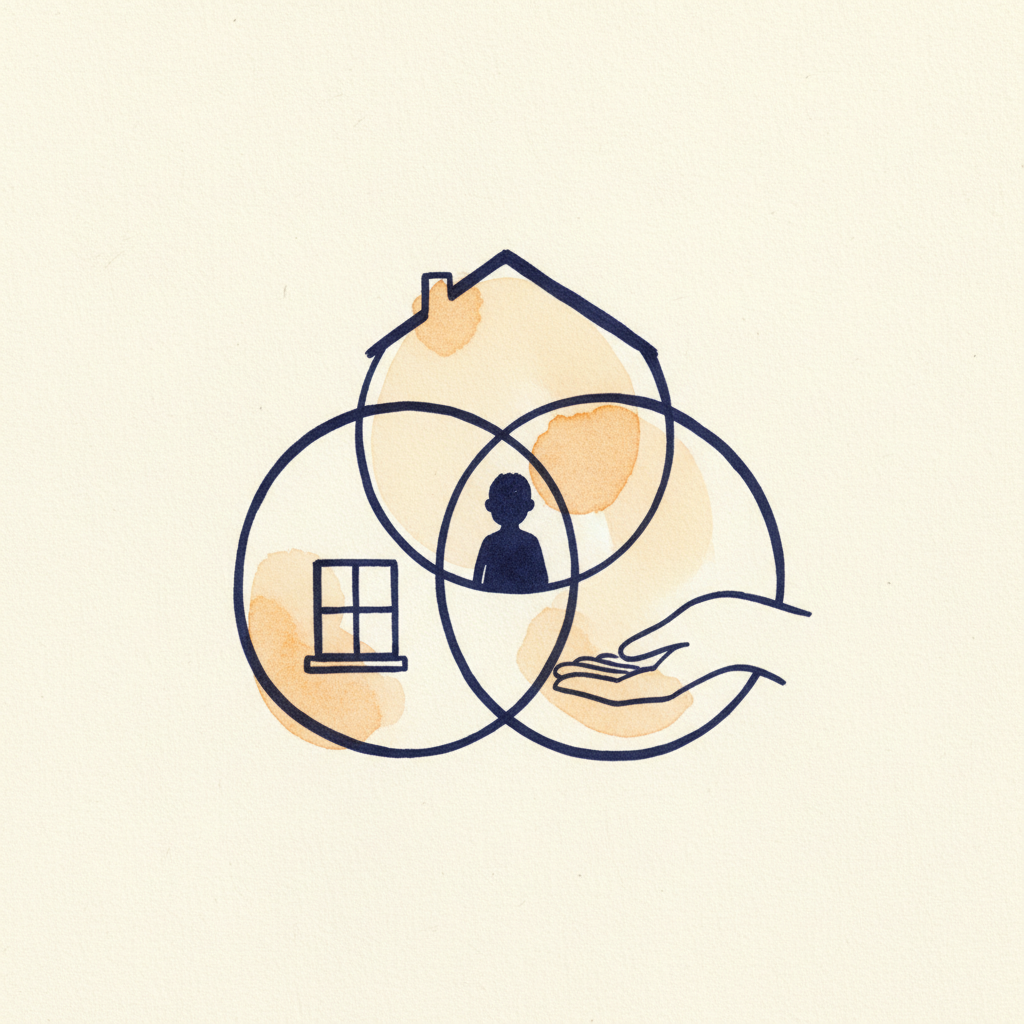
Home layer. Small practices embedded in daily routines. Listening to audiobooks, rhyming games, clapping out syllables, simple sound activities. This layer rests on the parent’s shoulders and can start today. The cost is nearly zero, and at the right age it feels like play rather than work.
School layer. Communication with a teacher in preschool or the first years of primary school. The sentence “I am noticing a pattern in my child - what do you see?” turns the teacher into an ally. Support classes, classroom adaptations, and eventually a formal support plan are all components of this layer.
Specialist layer. Working with a child development specialist, a special education specialist, or a clinical psychologist. The evaluation process, structured reading programs, and individualized sessions using specific methods. This layer rests on the specialist’s shoulders, but it is made possible by the parent’s coordination. The specialist’s work does not need to be repeated at home, but the guidance and feedback the specialist shares with the family strengthens the home layer.
When all three layers start early, they reinforce each other. The earlier the home layer begins, the more effectively school support can operate. The earlier the school gets involved, the more focused the specialist work becomes. No single layer is enough on its own, but together they form a solid foundation.
Coping With the “I’m Too Late” Fear
This post may trigger guilt in some parents. If your child is eight years old and you have just received a diagnosis, feeling “I waited too long, what have I done” is a normal reaction. Something needs to be said about that feeling: a late diagnosis is not the end of the road.
Many adults who were identified and supported well into adulthood have accepted dyslexia as part of who they are and have built strategies that fit their own learning style. The stories of famous people with dyslexia make these journeys visible. Whenever the diagnosis comes, the support that follows makes a real difference.
But when early action is possible, it offers the child a path with fewer obstacles. The word “early” here is not a race - it is an act of care. Children who receive a late diagnosis still gain valuable support and build successful lives. Children who receive an early diagnosis simply tend to carry less fatigue along the way. Both paths have value, but understanding the difference gives a parent a sense of direction in time.
Rather than feeling guilty, focusing on what you can do today is the healthiest approach. The past cannot be changed, but the future is open. A family that received a diagnosis at age ten and began support immediately might see visible progress in both reading skills and emotional wellbeing within two years. Experiences like this show that the “we are too late” feeling is, in many scenarios, simply not accurate. Starting today is far more productive than punishing yourself for not having started yesterday.
Early Intervention in Practice
Every country has its own system for identifying and supporting children with reading difficulties, but the underlying principle is universal: ask what pathways exist, and ask early.
In many countries, a school psychologist or learning support coordinator can serve as the first point of contact, even before formal schooling begins. In the United States, an Individualized Education Program (IEP) or a 504 plan provides structured accommodations and support. In the United Kingdom, an Education, Health and Care Plan (EHCP) or SEN support fills a similar role. Across Europe and beyond, comparable structures exist under different names. The first step is always the same: ask your school or local education authority what support is available for your child.
A visit to the pediatrician is also a practical early step, because hearing difficulties or vision problems can mimic or compound reading challenges, and it helps to rule these out. If the pediatrician is not familiar with dyslexia specifically, they can usually refer you to someone who is.
When choosing a specialist, it is worth asking whether they have experience with dyslexia and reading development specifically. Not every professional has the same depth of background in this area, and asking direct questions during a first meeting is not something to feel awkward about.
One important reminder: this blog is not a clinic. It does not diagnose, and it does not prescribe treatment. Our role is to curate and share research-informed information with parents. If you believe your child may benefit from an evaluation, reaching out to a qualified professional is always the right step.
What Is the First Step
“Early intervention” can sound like a large, abstract concept. In practice, the first step is very small and can be taken this week. Here are a few concrete starting points:
- Schedule a phone call with a specialist. Not a full evaluation, just a conversation. The specialist will listen and tell you what comes next.
- Tell the school teacher early. Use open language like “We have noticed a pattern and we are watching it - what do you observe on your end?”
- Start small observation and play activities at home. Rhyming games, audiobooks, finding words together. These activities are good for the child and they give you useful information at the same time.
- Say “this week’s phone call” instead of “the next meeting.” The enemy of early intervention is usually postponement, not a big decision.
Each of these steps is small on its own. What matters is the willingness to take them today.
Where to Go From Here
Acting early is not a race - it is an act of care. The goal is not to push a child through the system faster, but to make their journey smoother. Whether or not you have a diagnosis, small steps taken today contribute to both reading development and emotional wellbeing. A late diagnosis is not the end, but the earliest possible moment is the right moment.
For more awareness posts and parent-focused guides, the kindlexy.com blog keeps growing with content for every stage, from the very first questions through the school years. Your concern deserves to be taken seriously, and you do not need to be a professional to turn that concern into action. Asking a question, making a phone call, playing an audiobook - that is enough. A parent who takes the first step has already given their child one of the most valuable forms of support, because that step shapes both the timeline and the story the child tells about themselves.