
If your child struggles with numbers, the kitchen table can do more than any worksheet. You do not need to be good at math yourself, and you do not need a program or a budget. What helps a child with dyscalculia most is small, steady, low-pressure practice woven into ordinary days. This is the part of the series where the ideas become things you can actually do tonight. Here are six of them.
1. Make Numbers Something They Can Touch
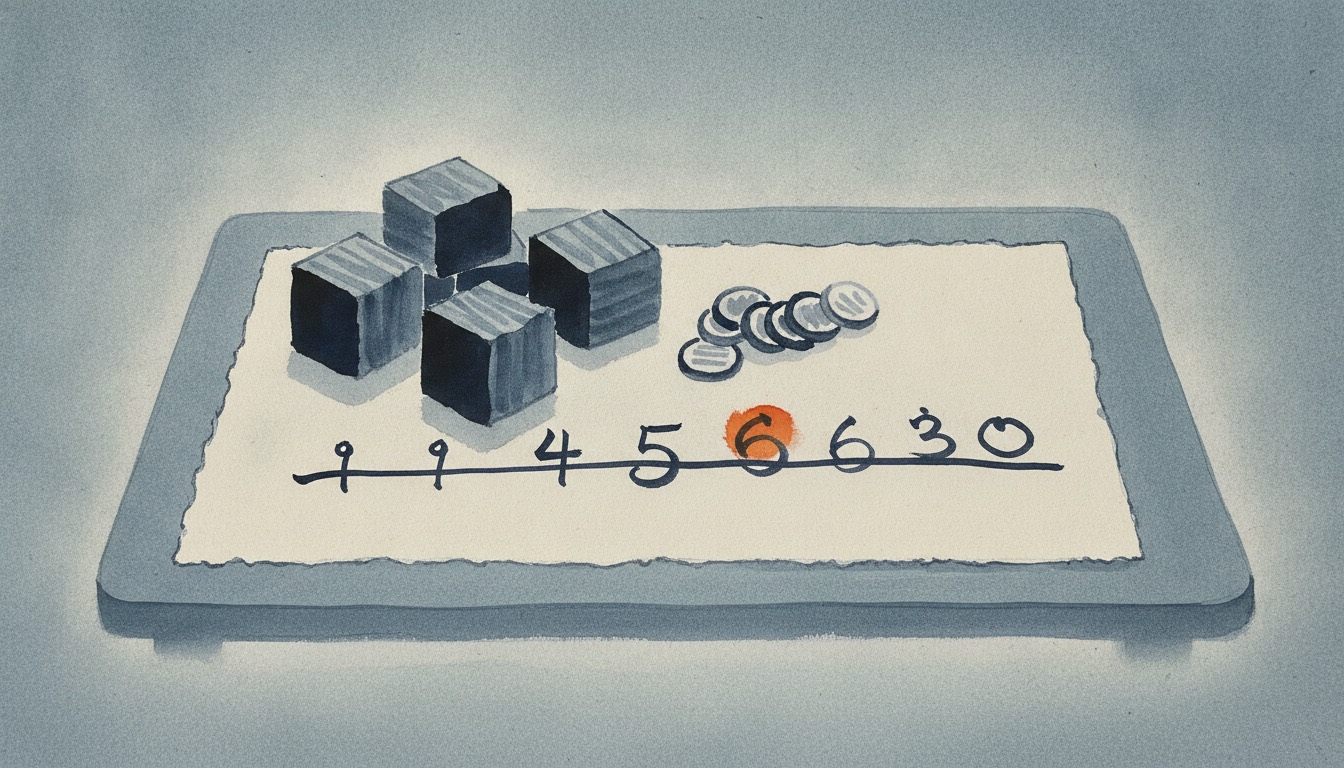
For a child with dyscalculia, a number on a page is an abstract symbol with no weight behind it. The single most helpful thing you can do is make numbers physical. Count with buttons, blocks, pasta, or coins. Let your child move objects into groups, line them up, split them in two. When “seven” is something they can hold and rearrange, it slowly stops being a meaningless squiggle and starts being a quantity they understand. Using fingers or objects is not a crutch to grow out of; it is how the brain builds number sense, so never rush them off it.
2. Put a Number Line Where They Can See It
A simple number line, drawn on paper and stuck to the fridge or the desk, is one of the most powerful tools for dyscalculia, and it costs nothing. If you would rather print a clean one, our free Number Line maker does it in seconds. It turns adding and subtracting into something you can see and step along, rather than something you have to hold in your head. Counting up to add, counting back to subtract, finding which number is bigger by looking at who is further along, all of it becomes visual and concrete. Seeing numbers in space helps where holding them in memory does not.
3. Let Math Live in Everyday Moments
The most natural math practice does not look like math at all. Cooking together means doubling a recipe or counting out spoons. Shopping means comparing prices or counting change. Setting the table, sorting laundry, sharing snacks equally, telling the time before a favorite show, these are real, low-stakes moments where numbers matter and there is no test attached. A child who freezes at a worksheet will often happily count out the forks for dinner, and that counts just as much. If you have read Dyscalculia at School, this is the home half of the same idea: the math that sticks is the math that means something.
4. Take the Clock Out of It
Speed is the enemy of a child with dyscalculia. Timed drills and “quick, what’s six times four” questions do not build skill; they build fear, and fear shrinks the very working space the brain needs for numbers. When times tables do come up, a printable Multiplication Grid lets your child find the answer by looking rather than racing to recall it. At home, you have the freedom schools often do not: you can let your child take as long as they need. Give them time to think, let them use their fingers and the number line, and resist the urge to jump in with the answer. A calm, unhurried minute teaches far more than a panicked five seconds.
5. Short, Playful, and Often
Ten focused minutes beat an exhausting hour every time. A child with dyscalculia tires quickly when numbers are involved, so keep practice short and end it while they still feel capable, not crushed. Lean on games:
- Dice
- Dominoes
- Card games
- Board games with a spinner and squares to count along
Play hides the practice inside something fun, and frequency matters more than length. A few small, cheerful moments most days will do more than one long, dreaded session a week.
6. Praise the Effort, Name the Strength
A child who struggles with math often decides early that they are “just bad at it,” and that belief does more damage than any missed sum. Your words are the counterweight. Praise the trying, the sticking with it, the clever workaround, not just the right answer. And name what they are good at out loud, often: the way they tell stories, build things, notice patterns, solve problems their own way. The goal is a child who believes “I can learn this, in my own time,” instead of one who has quietly decided math is not for them. As you go, you can revisit what dyscalculia is and how it often travels with dyslexia.
The Thread That Ties Them Together
Notice what all six have in common: none of them are really about math. They are about making numbers concrete, taking away pressure, and protecting your child’s belief in themselves. You do not have to do all six, and you do not have to do them perfectly. Pick one this week. Count something together, draw a number line, play a game, and let the rest follow. Steady and gentle beats fast and anxious every single time, and your calm presence at the table is the most powerful support there is.
For more parent guidance and free tools, kindlexy.com is always here.