
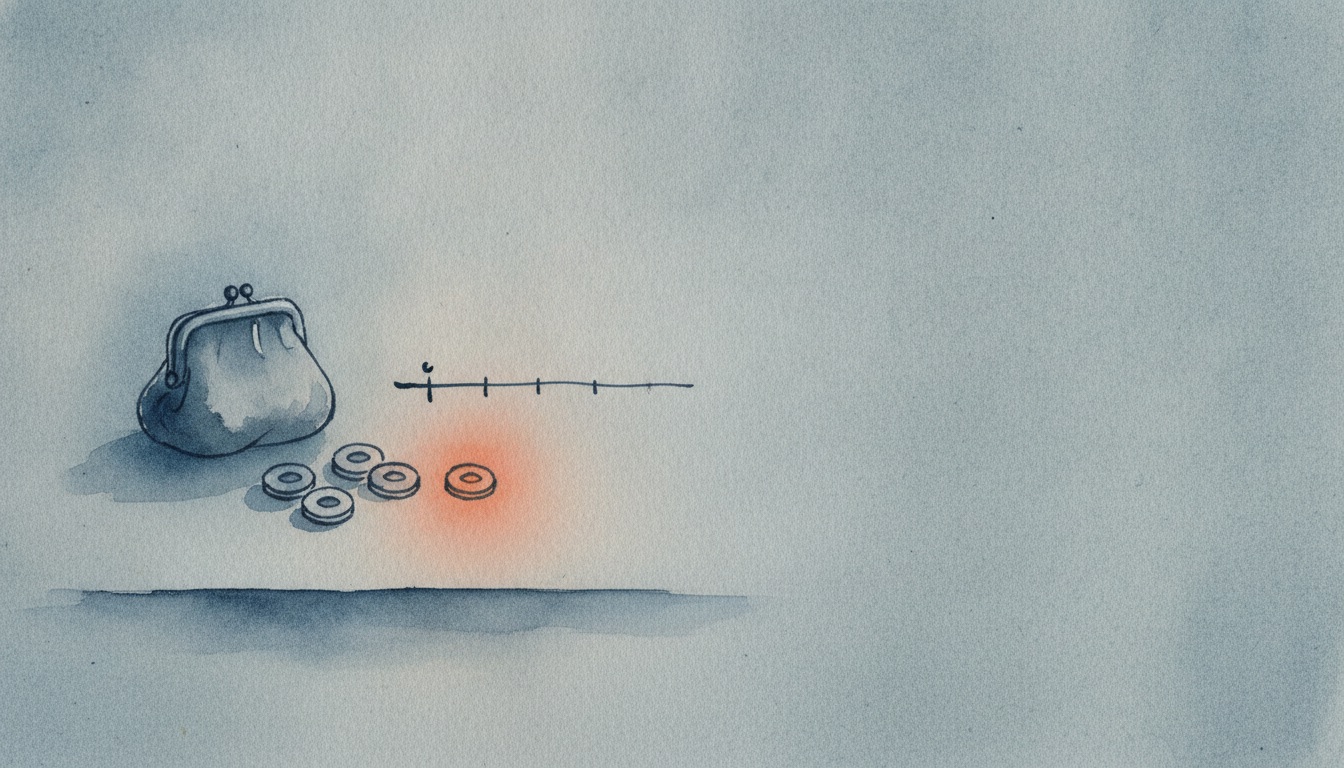
Of all the places dyscalculia shows up in daily life, money is often the one that worries parents most. Not because a child cannot learn it, but because it is the math that never stays on the worksheet. It follows them to the shop, the bus, the birthday party, and one day to living on their own. The good news is that money is a skill, not a talent, and it can be built slowly, kindly, and in a way that sticks. This is the practical, real-world half of the dyscalculia series, picking up where supporting your child at home leaves off.
Why Money Is Especially Hard
It helps to understand why money trips up a child with dyscalculia more than almost anything else, because once you see it, you stop expecting the wrong things.
Money asks the brain to do several difficult things at once. Coins and notes are abstract symbols of value that do not match their size, a small coin can be worth more than a big one, which makes no intuitive sense. Prices change constantly. And the hardest part, working out change, is a multi-step calculation done under mild social pressure, at a counter, with someone waiting. For a child who already finds numbers slippery, that is a lot to hold at once. None of it means they cannot manage money. It means they need concrete strategies instead of mental arithmetic, and that is something you can teach.
Start with Real Coins in Their Hands
Before any adding or subtracting, a child needs to know money as objects. Sit down with a handful of real coins and notes and just explore them. Sort them, name them, line them up from least to most valuable. Talk about what each one can buy. When money is something they can hold, group, and swap, its value slowly becomes real rather than a number they are supposed to memorize. Using the physical coins is not babyish and it is not a stage to rush past, it is exactly how number sense for money is built.
Give Them a Strategy for Change
Change is where most money anxiety lives, so give your child a method that does not rely on fast mental subtraction. The friendliest one is counting up. If something costs 7 and they pay with 10, they do not subtract, they count forward: “7, then 8, 9, 10, so that is 3 back.” A number line makes this visible and takes the pressure off holding it in their head. Practice it at home first, with no queue behind you, until counting up feels automatic. A reliable strategy they trust beats a fast answer they dread every time.
Let the Calculator Be a Tool, Not a Shame
Somewhere along the way, many children pick up the idea that needing a calculator means they are bad at math. Gently take that idea apart. Adults use the calculator on their phone at the shop all the time, and no one thinks twice. For a child with dyscalculia, a calculator is not a crutch, it is the same kind of tool a map is for someone with a poor sense of direction. Teach them to use it well, to estimate first and then check, and you hand them independence instead of embarrassment.
Practice Where the Stakes Are Low
The shop is the real exam, so do the studying beforehand where mistakes cost nothing. Play shop at home with real coins and price tags. Round prices to make estimating easy: “that is about 5, and that is about 3, so we need about 8.” When you do go out together, give them one small job, paying for the bread, checking if 10 is enough, and let them take their time. A little pocket money is one of the best teachers there is, because it is real, it is theirs, and the lessons are small and safe. Every one of these is low-pressure rehearsal for the moments that will matter later.
Protect Their Confidence Most of All
More than any technique, guard how your child feels about money. A child who decides early that they are “hopeless with money” carries that belief into adulthood, and it does more harm than any miscounted change. Praise the strategy, not just the right total. Notice when they estimate well, when they remember to count up, when they ask for the calculator instead of guessing in a panic. Remind them, and mean it, that plenty of capable adults use these exact tools every day. The goal is not a child who does mental arithmetic at the till. It is a young person who walks into a shop believing “I have ways to handle this,” because they do.
The Thread That Ties It Together
Managing money with dyscalculia is not about being quick with numbers, it is about having concrete, trusted strategies and the confidence to use them out loud:
- Real coins in the hand
- Counting up for change
- A calculator held without shame
- Low-stakes practice
- A protected sense of self
Pick one to start this week, maybe just sorting coins at the table, and let the rest grow from there. If you want to revisit the bigger picture, what dyscalculia is is always a good place to return to.
For more parent guidance and free tools, kindlexy.com is always here.